




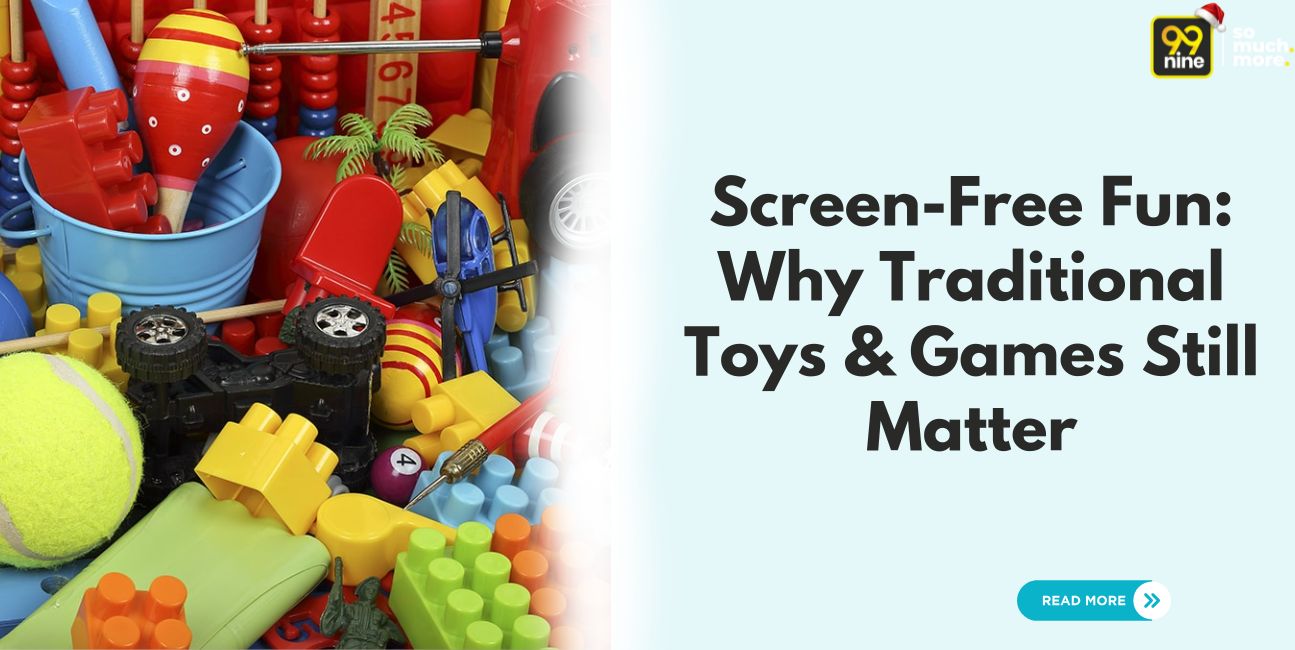
Screen-Free Fun: Why Traditional Toys & Games Still Matter
The flicker of a tablet screen has become the modern lullaby for many Indian households. From bustling cities like Mumbai to the quiet lanes of Kerala, digital consumption is at an all-time high. However, as we look at the development of the next generation, a vital question arises: are we losing the tactile magic of childhood? Traditional Toys & Games offer more than just nostalgia; they provide a foundational developmental experience that a touch screen simply cannot replicate.
In a world obsessed with high-speed internet and virtual reality, the humble wooden spinning top or a deck of cards might seem outdated. Yet, these items are the silent architects of cognitive and social growth. For parents and professionals balancing a hectic life, reintroducing traditional toys for kids is not just a trend—it is a necessity for holistic development.
The Cognitive Power of Physical Play
When a child interacts with Traditional Toys & Games, they engage in three-dimensional problem-solving. Think about the last time you saw a child struggle to balance a wooden block tower. That moment of frustration followed by a tiny adjustment is physics in action. Unlike an app where “gravity” is programmed, physical play teaches the laws of the universe in real-time.
Educational traditional toys foster deep concentration. A screen provides instant gratification with flashing lights and sounds. In contrast, a puzzle requires patience. This delayed reward system is crucial for building a child’s attention span—a trait that is becoming increasingly rare.
Why do we trade these valuable lessons for the convenience of an iPad? It is often because we underestimate the complexity of simple play. Traditional toys for kids like building blocks or clay demand that the child brings the imagination to the toy, rather than the toy providing the imagination for the child.
Social Engineering Through Traditional Toys & Games
In the Indian context, play has always been a communal activity. Whether it is a game of Ludo, Pachisi, or Gilli Danda, these activities require negotiation, turn-taking, and conflict resolution. Traditional Toys & Games serve as the first training ground for social intelligence.
Consider the social dynamics of a board game. Children must learn to:
- Wait for their turn without throwing a tantrum.
- Understand and follow a set of established rules.
- Handle the sting of losing with grace.
- Communicate strategies with teammates.
When kids play with traditional toys for kids, they look each other in the eye. They read facial expressions and body language. These are “soft skills” that determine success in the professional world later in life. Can a multiplayer video game truly teach empathy the same way a face-to-face game can? Probably not.
The Physical Advantage: Fine and Gross Motor Skills
We are seeing a rise in children who struggle with basic grip strength and hand-eye coordination. Constant swiping on a screen does not develop the muscles needed for writing or drawing. This is where wooden traditional toys and physical games step in to bridge the gap.
Traditional Toys & Games encourage movement. Whether it is the precision required to spin a Latto (top) or the gross motor skills needed for Hopscotch, physical toys keep children active.
Toy Type | Developmental Benefit |
Wooden Blocks | Spatial awareness and grip strength |
Puzzles | Cognitive mapping and fine motor control |
Board Games | Logical reasoning and social patience |
Outdoor Games | Physical fitness and teamwork |
By choosing traditional toys for kids, you are essentially giving them a full-body workout for both their muscles and their brain.
Eco-Friendly and Safe: The Sustainable Choice
Modern plastic toys are often cheaply made, break easily, and end up in landfills. On the other hand, eco-friendly traditional toys are built to last generations. Many of our Indian heritage toys are made from sustainable wood, natural dyes, and non-toxic materials.
Safety is a paramount concern for any parent. Safe toys for children are those that do not contain harmful phthalates or lead-based paints often found in low-quality mass-produced plastic items. When you invest in handmade traditional toys, you are often supporting local artisans who use time-tested, natural methods of production.
How often do we consider the environmental footprint of a battery-operated toy? Traditional Toys & Games do not require charging or batteries. They are powered by imagination and human energy, making them the ultimate “green” choice for the conscious Indian consumer.
The Cultural Connection
For the Indian diaspora and those living in India alike, Traditional Toys & Games are a bridge to our heritage. Each region of India has its own unique contribution to the world of play. From the lacquerware toys of Channapatna to the puppets of Rajasthan, these objects tell a story.
Introducing traditional toys for kids allows parents to share their own childhood stories. It creates a multi-generational bond. When a grandfather teaches his grandson how to play a game he played fifty years ago, it is more than just fun—it is a transfer of culture and values.
Does a digital game carry the same weight of history? It is unlikely. Traditional Toys & Games carry the soul of a community. They remind us of a time when life was slower and connections were deeper.
Practical Tips for Transitioning to Screen-Free Fun
- Start Small: Do not throw away all the gadgets at once. Introduce one new board game or a set of wooden traditional toys every month.
- Lead by Example: If you are always on your phone, your child will be too. Set aside a “device-free” hour where the whole family engages in Traditional Toys & Games.
- Create a Play Nook: Dedicate a space in your home for physical toys. Use open shelves where traditional toys for kids are easily accessible.
- Rotate the Toys: To keep things fresh, don’t put all the toys out at once. Rotate them so the child feels like they are getting something “new” every few weeks.
- Focus on Quality: Look for handmade traditional toys that offer sensory variety—different textures, weights, and smells (like sandalwood or cedar).
Join the Community: Follow us on social media to stay updated on exclusive deals, new arrivals, and tips for better living!
Why Quality Matters: The 99 Nine Store Difference
Finding authentic, high-quality playthings can be a challenge. This is where specialized curators like 99 Nine Store come into play. They understand that Traditional Toys & Games are an investment in a child’s future. By focusing on safe toys for children and educational traditional toys, they provide parents with options that are both fun and developmental.
Whether you are looking for traditional toys for kids that spark creativity or wooden traditional toys that stand the test of time, choosing a trusted source ensures you get products free from toxins and full of character.
Breaking the Digital Addiction
The “boredom” children feel when a screen is taken away is actually a creative threshold. When a child is bored, their brain starts to look for ways to entertain itself. This is the moment they reach for Traditional Toys & Games. They start to build, to draw, or to invent their own rules for a game.
By providing traditional toys for kids, you give them the tools to cross that threshold. You allow them to become creators rather than just consumers of content. Is there anything more powerful than watching a child lost in a world they created themselves?
The Long-Term Impact on Mental Health
Recent studies suggest a link between excessive screen time and increased anxiety in children. The fast-paced nature of digital media can overstimulate the nervous system. Traditional Toys & Games, however, have a grounding effect. The tactile sensation of wood, the sound of dice hitting a board, and the physical presence of playmates help regulate a child’s mood.
Traditional toys for kids promote mindfulness. When a child paints a handmade wooden figurine, they are in a state of “flow.” This type of focused, quiet activity is essential for mental well-being in an increasingly loud world.
Enhancing Literacy and Numeracy
Many people think of Traditional Toys & Games as purely recreational, but they are secret weapons for academic success.
- Counting: Board games involve constant counting of spaces and points.
- Reading: Following instructions and reading cards builds literacy.
- Vocabulary: Playing with others introduces new words and conversational patterns.
Using educational traditional toys makes learning feel like a natural byproduct of fun rather than a chore. This positive association with learning is one of the greatest gifts you can give a child.
Supporting Local Artistry
When we choose handmade traditional toys, we are keeping ancient crafts alive. India has a rich history of toy making that is currently under threat from mass-produced imports. By purchasing Traditional Toys & Games from reputable Indian sources, you are contributing to the local economy and ensuring that these skills are passed down to future artisans.
Is it possible that the toy you buy today helps a craftsman in a small village keep his workshop open? Absolutely. This makes the purchase of traditional toys for kids an act of social responsibility as well as a parenting choice.
Redefining “Modern” Play
We need to redefine what it means to be a “modern” parent. Being modern doesn’t mean having the latest gadgets; it means making informed, conscious decisions for your family’s health and happiness. Integrating Traditional Toys & Games into a modern lifestyle shows a deep understanding of what children actually need.
Wooden traditional toys fit perfectly into the minimalist, aesthetic homes of today’s working professionals. They look beautiful on a coffee table and serve a functional purpose. They are a statement that you value quality over quantity.
Conclusion: The Timeless Value of Play
As we have explored, the benefits of Traditional Toys & Games are multifaceted. They build the brain, strengthen the body, and soothe the soul. While technology has its place in education and entertainment, it should not be the sole occupant of a child’s time.
By choosing traditional toys for kids, you are choosing to give them a childhood filled with real textures, real social interactions, and real memories. These toys do not break when the Wi-Fi goes down; they do not require updates; and they never run out of battery.
Are you ready to see the difference that screen-free fun can make in your home? The shift starts with one simple choice. Whether it’s a set of wooden traditional toys or a classic board game, the results will speak for themselves.
Invest in your child’s growth by exploring the curated collection at 99 Nine Store. Their commitment to Traditional Toys & Games ensures that you are providing the very best for the next generation. From eco-friendly traditional toys to the most engaging educational traditional toys, they have everything you need to bring back the joy of physical play.
FAQ
FAQs About 99nine Store
Not at all. While digital tools have their place, traditional toys offer unique, irreplaceable benefits. They foster three-dimensional problem-solving, real-world physics understanding, sustained concentration, and creativity that originates from the child's own mind, not from pre-programmed software. They are foundational tools for holistic cognitive and social development.
Traditional toys provide a tangible, engaging alternative to screens. They combat the "boredom" that leads to screen-seeking by giving children the tools to create their own fun. The tactile satisfaction and social interaction they offer can naturally make screen-based entertainment less appealing, helping to establish healthier play habits.
High-quality, authentic traditional toys are often safer than many mass-produced plastic toys. Reputable sources (like 99 Nine Store mentioned in the article) curate toys made from sustainable materials like solid wood, use non-toxic, natural dyes, and avoid harmful chemicals like phthalates and lead-based paints. Always look for trusted artisans or sellers who prioritize safety and craftsmanship.
They build a wide range of critical skills, including:
Fine & Gross Motor Skills: Through grasping, building, throwing, and jumping.
Social Intelligence: Via turn-taking, rule-following, negotiation, and reading facial expressions in board games and group play.
Executive Functions: Such as patience, focus, and delayed gratification (e.g., completing a puzzle).
Real-World Cognitive Skills: Like spatial reasoning, balance, and cause-and-effect learned through physical experimentation.
You can seek out specialty toy stores, online curators dedicated to handmade and eco-friendly products, and platforms that support local artisans. As highlighted in the article, stores like 99 Nine Store specialize in curating safe, high-quality, and educational traditional toys that support child development and preserve cultural craftsmanship. Looking for toys from specific Indian craft clusters (e.g., Channapatna toys) is also a great way to ensure authenticity and quality.