




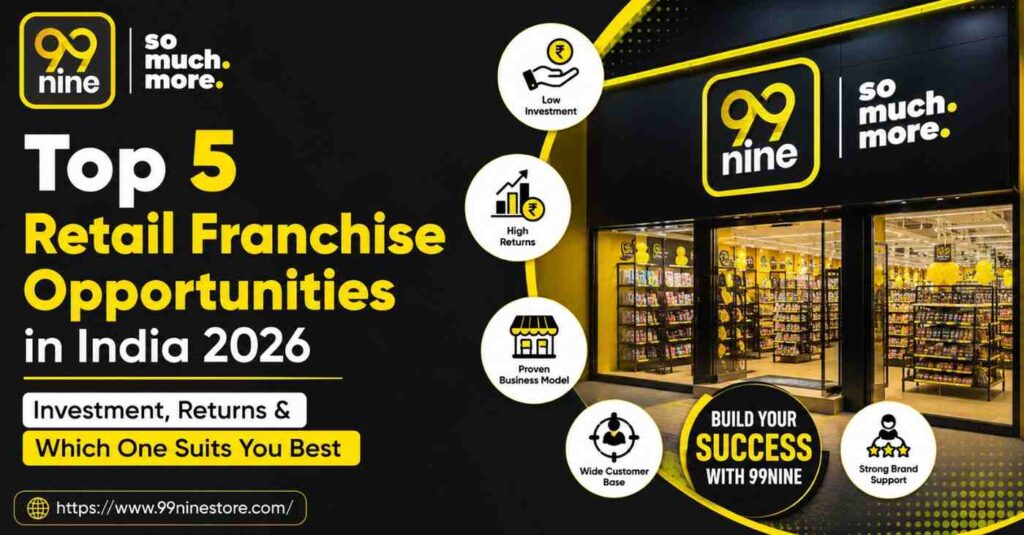
Top 5 Retail Franchise Opportunities in India 2026 – Investment, Returns & Which One Suits You Best
Top 5 Retail Franchise Opportunities in India for 2026 The retail industry in India is developing at unprecedented rates, and many intelligent entrepreneurs are looking for Retail Franchise Opportunities in India. A retail franchise basically means that you get a ready-made business setup in your hand. Someone gives you the brand name, the products, the training, and the complete game plan. You simply open the doors and welcome your customers. With India’s middle class spending more every year on home décor, kitchenware, beauty, toys, and gifting products, this is genuinely the best time to explore Retail Franchise Opportunities in India and build a business that grows with the country. What Makes Retail Franchise Opportunities in India So Attractive in 2026? This can be demonstrated by the following statement: Starting a business from scratch is akin to planting a seed and waiting for many years to see the fruit-bearing tree grow; whereas launching a franchise is similar to buying a fully grown tree with established roots. The thriving economy of consumption in India has resulted in enormous demands for the best franchised business model products.People shop every single day. Your job is simply to be the store they shop at. What to Check Before You Invest – A Smart Investor’s Checklist Not every franchise is the right fit for every investor. Before you sign anything, carefully check these six things: Brand recognition: Do people in your city already know and trust this brand? Investment: Are all costs of the total investment clearly spelled out without any hidden charges? Categories: More categories lead to more visits by customers as well as an increased basket value per week Profit potential: Know your profit margins and what your monthly income should be like before anything else Store location help: Does the brand actually help you look for the perfect store location? After-launch support: Will the brand train your staff and supply fresh stock consistently? Answer these six points honestly before committing your money. They will save you from a very costly and avoidable mistake. Top 5 Retail Franchise Opportunities in India in 2026 1. 99ninestore – Lowest Investment, Highest Daily Footfall For anyone searching for a franchise near me that is truly affordable and built for everyday Indian families, 99ninestore is the clear answer. With 3,000+ products across kitchen essentials, home décor, toys, stationery, beauty, and gifting – all priced from ₹29 to ₹999 – this brand has something for every customer every day. The franchise cost is among the lowest in India’s organised retail segment, making it the most accessible business with low investment available today. Store setup support, staff training, centralised warehousing, and territory assistance are all included from day one. 99ninestore is not just a store – it is a community retail experience people genuinely enjoy returning to. 2. MINISO India – International Lifestyle Franchise with High Consumer Pull MINISO is a famous international lifestyle brand operating in India through more than 300 stores catering to needs such as home, beauty, fashion accessories, and electronics. The MINISO India franchise investment required in India amounts to INR 70 lakhs or more. Such a franchise investment is appropriate only for entrepreneurs having a large budget to invest. Despite being a brand with high consumer pull and great marketing nationwide, it remains unattainable because of its high entry fee compared to other good franchises in India. 3. Mumuso India – Korean Lifestyle Fashion for Urban Shoppers Mumuso offers products related to fashion, beauty, and lifestyles inspired by Korea, at more than 60 locations around India. The structure of FOFO in India under Mumuso has a smaller brand fee compared to MINISO. However, there are fewer categories available, targeting mainly fashionable young urban people. For investors looking for a venture that requires little capital and serves a wider consumer demographic, this restriction on the category might affect footfall daily. 4. Home Centre – Superior Home Furniture for Larger Investment Sums Home Centre offers premium large format furniture stores that are owned by the Landmark group and have a robust pan India presence. The size of their outlets ranges between 10,000 sq ft to 30,000 sq ft, and therefore needs very high investment. If one is looking for a franchise near me offering quick breakeven and low start-up intricacies, then this is not the choice. 5. Reliance Smart Point – FMCG and Groceries Value Retailing Reliance Smart Point boasts more than 1,500 outlets and huge brand loyalty in India. It mainly targets groceries and FMCG sectors and not lifestyle and gifts. This is because of thin margins in groceries, along with high complexities in daily operations that make it hard for first-time retail franchise entrepreneurs to choose it as a great franchise business venture. Which Retail Franchise Opportunities in India Would Be Ideal For You? In case you are looking for franchise opportunities which would attract maximum number of customers per day, require minimum initial capital investment, and have a product line that can actually benefit all the families in India – 99ninestore is the way to go. Retail franchise opportunities in India which would be ideal for the year 2026 include low initial investment, variety in products, and high consumer demand. Retail Franchise Opportunities in India have never been more accessible or more rewarding than they are right now. The market is ready. Consumers are spending confidently. Every city in India — from Delhi to Jaipur to Bengaluru – is bursting with untapped Retail Franchise Opportunities in India waiting for the right entrepreneur to walk through that door. With 99ninestore, the right business with low investment in your city can turn daily shoppers into loyal, returning customers for years ahead – because when products start at just ₹29, everyone walks in. If you have been searching franchise near me and wondering where the real opportunity lies – stop wondering. The franchise business in India landscape is full of promise, and that brand is already waiting for you. It is called 99ninestore. 👉Want to