


99nine Store

retail store franchise india
Blog

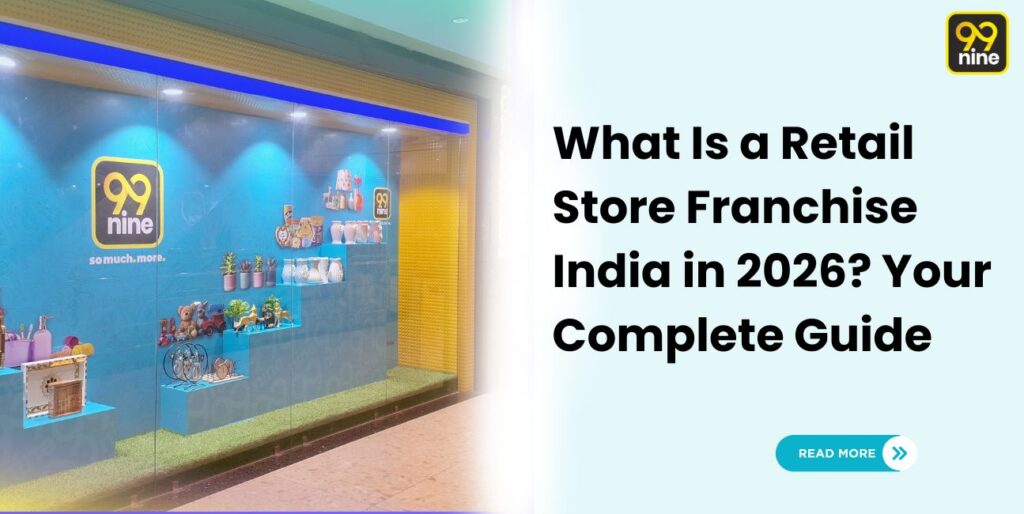
What Is a Retail Store Franchise India in 2026? Your Complete Guide

Have you ever walked past a beautifully decorated gift shop and thought, “I wish I owned something like that”? In 2026, that dream is more achievable than ever. A retail store franchise India is one of the fastest, most reliable ways to step into entrepreneurship — especially when India’s retail sector is on track to hit $1.8 trillion by 2030 (India Brand Equity Foundation, 2024). Whether you’re a homemaker looking for a side income, a young professional ready to go independent, or someone who simply loves gifting and lifestyle products, this guide is for you. What Is a Retail Store Franchise India? A retail store franchise is a business arrangement where you (the franchisee) pay an established brand to use their name, products, and systems to run your own store. Instead of building a business from zero, you’re stepping into a tested model with built-in customer trust. According to the Franchise Association of India (FAI), over 4,500 active franchise brands are operating across the country as of 2024, with the retail segment growing at nearly 30% annually over the last five years. Low risk, quicker returns, and brand support make it a smart starting point for new business owners. Why Is the Retail Franchise Market Growing So Fast in India? India’s middle class now exceeds 600 million people (World Bank, 2024). They’re spending more, gifting more, and expecting more from the stores they walk into. The gifting industry alone is worth ₹1.5 lakh crore annually (ASSOCHAM, 2023), and it keeps rising every festive season. Here’s what’s driving the retail store franchise India boom: How Does the 99nine Store Franchise Work? If you’re specifically interested in gifting, jewellery, and lifestyle products, the 99nine store franchise is one of the most exciting options available right now. Built around the idea of making gifting beautiful and affordable for every Indian family, 99nine Store has crafted a model that works equally well for first-time owners and experienced retailers. The 99nine store franchise operates with a simple philosophy: every person deserves access to high-quality gifting products without breaking the bank. From a teenager buying her best friend a birthday gift, to a father searching for a wedding anniversary surprise — the store has something for everyone. What’s on the 99nine Store Products List? The 99nine store products list spans multiple categories: This wide range means your store stays relevant throughout the year — not just during peak seasons. Can I Browse the 99nine Store Online? Absolutely. Head over to the 99nine store online at 99nine store to explore the full product catalogue, get a feel for the brand, and understand what your store inventory could look like. The website is clean, easy to use, and regularly updated with new collections. Retail Store Franchise India: Comparison Table How does the 99nine store franchise compare to other popular options? Here’s an honest side-by-side look: Franchise Brand Segment Estimated Investment Royalty Fee Best For 99nine Store Gifting & Lifestyle ₹3 – 8 Lakh Low / Minimal First-time owners, women entrepreneurs Archies Gallery Gifting & Cards ₹10 – 20 Lakh Moderate Established retailers Ferns N Petals Flowers & Gifting ₹15 – 25 Lakh Moderate–High Urban market investors Miniso India Lifestyle Products ₹25 – 50 Lakh High Large-investment franchisees As the table clearly shows, a retail store franchise India with 99nine Store offers the lowest barrier to entry while staying in one of India’s highest-demand product categories. Is a Retail Store Franchise India Right for You? Ask yourself these questions honestly: If you said yes to most of these, owning a retail store franchise India could be exactly the opportunity you’ve been waiting for. The gifting segment appeals to virtually every age group — making footfall consistent and customer loyalty high. How to Get Started – Step by Step Here’s a simple roadmap to launch your own retail store franchise India: Final Word India’s retail future is local, personal, and product-driven — and the gifting segment sits right at the heart of that shift. Owning a retail store franchise India gives you a head start with a proven brand, ready products, and a market that never runs out of occasions to celebrate. The 99nine store franchise is built precisely for this moment — affordable, versatile, and deeply aligned with how Indians shop and gift in 2026 and one more thing you can connect with us on Social Media as well Ready to take the next step? Visit https://www.99ninestore.com/today, explore the franchise opportunity, and call their team to secure your city before someone else does. 99nine Store Franchise: Frequently Asked Questions What is a retail store franchise in India? A retail store franchise in India lets you run your own store under an established brand. You pay a franchise fee, receive products and training, and operate using the brand’s proven system. How much investment is needed to open a retail franchise in India? It depends on the brand. Accessible options like the 99nine store can start from ₹3–8 lakh, making it one of the most affordable entry points in India’s franchise space. Where can I find a 99nine store near me? Visit https://www.99ninestore.com/ to find a 99nine store near you or check franchise availability in your city. Is a retail franchise in India profitable in 2026? Yes. With India’s gifting market valued at over ₹1.5 lakh crore and growing, a well-located retail store franchise India outlet can generate consistent monthly income, especially in residential neighbourhoods and commercial areas. What products does 99nine store sell? The 99nine store sells gifts, artificial jewellery, home décor, fashion accessories, and limited-edition festival collections.

99nine Store Franchise India
Blog

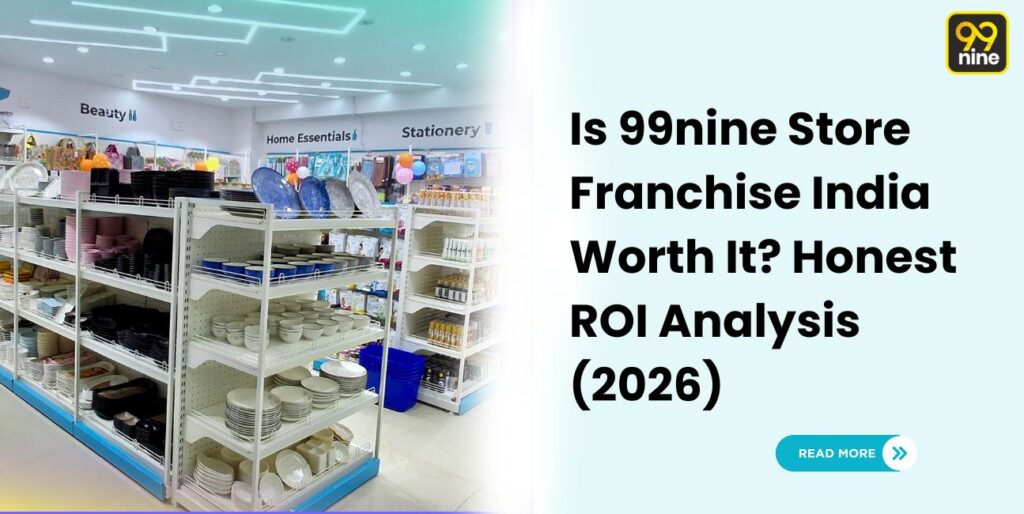
Is 99nine Store Franchise India Worth It? Honest ROI Analysis (2026)

Try entering any bustling Indian marketplace, and you will be able to locate it immediately. It is the shop with the bright lights and the promise that everything inside is available for exactly ₹99. That is the magic behind the 99 Store business model. It is the appeal to the deep-rooted Indian desire for value, fixed pricing, and variety under one roof. This affordable variety retail model is growing exponentially in India, especially in Tier 2 and Tier 3 cities, where middle-class families want to shop smart without the premium pricing. But as a potential investor, you want to know the honest truth. Is 99 Store Franchise India worth your hard-earned money? This blog breaks down the real numbers, franchise costs, expected returns, profit margins, and what other investors have experienced so you can decide with clarity, not just excitement. What Exactly Is the 99 Store Business Model? Before you invest a single rupee, understand what you are buying into. The 99 Store is a retail business with a fixed price mechanism. All the items available in the retail store, such as kitchenware, stationery, toys, home decor, personal care items, etc., are priced at ₹99. This is an effective way to remove price negotiations from the retail equation. The 99 store business model India is inspired by various concepts from around the world, such as Dollar Tree from the USA and Daiso from Japan, which are both billion-dollar companies. The 99 store business model is still in the growth stage in India, which means that the early birds will benefit the most. Key pillars of the model include: This structure keeps operational costs lean, which is exactly why franchise investors find it appealing. 99nine Store Franchise Cost India: What Does It Actually Take? Let us talk numbers — because that is what every serious investor wants to know. The cost of the 99nine store franchise in India may vary depending on the city and the franchisor model. Based on the information available and the data for 2026, the following is a realistic investment breakdown for a 99nine store franchise in India: Investment Component Estimated Cost (INR) Franchise/License Fee ₹1,50,000 – ₹3,00,000 Interior Setup & Branding ₹2,00,000 – ₹4,00,000 Initial Inventory Stock ₹3,00,000 – ₹5,00,000 Security Deposit (Rental Space) ₹1,00,000 – ₹2,50,000 POS System & Technology ₹30,000 – ₹60,000 Miscellaneous (Legal, Marketing) ₹50,000 – ₹1,00,000 Total Estimated Investment ₹8,30,000 – ₹15,10,000 For a mid-sized town, a reasonable 99nine store investment India figure would be around ₹10 to 12 lakhs for a well-set-up store, which should ideally be around 400 to 600 square feet. This is significantly less compared to other business models like fast food or apparel, which can go up to ₹30 to 70 lakhs or more. 99nine Store Franchise Profit: Realistic Expectations This is the section where most blogs get vague. We will not do that. The three factors on which the profit of a 99nine store franchise depends are footfall, average bill size, and product margin. Let’s consider a real-life scenario. Sample Monthly Revenue Calculation (Mid-Tier City Store): In practice, a well-managed store in a locality with solid footfall typically generates ₹5–8 lakhs per month in revenue during its first year. Monthly Cost Structure: Expense Head Monthly Cost (INR) Shop Rent ₹20,000 – ₹60,000 Staff Salaries (2–3 employees) ₹25,000 – ₹45,000 Inventory Replenishment ₹2,50,000 – ₹4,00,000 Electricity & Utilities ₹8,000 – ₹15,000 Royalty/Franchise Fee (if applicable) ₹10,000 – ₹20,000 Total Monthly Costs ₹3,13,000 – ₹5,40,000 Monthly Net Profit: ₹60,000 – ₹2,50,000 This gives a 99nine store profit margin India of approximately 12–25%, which compares favourably with traditional grocery retail (5–8%) and most F&B franchise models at similar investment levels. 99nine Store ROI India: When Do You Break Even? The big question — when do you actually get your money back? Based on the numbers above, here is a straightforward 99nine store ROI India analysis: This means that an investor who is disciplined and who has chosen a good location to set up a 99nine store franchise, along with being smart in his inventory management, can earn back his entire investment within 12-18 months, a time period that is reasonable for any small business in India. This contrasts with a clothing store, where the break-even point is 24-36 months, or a restaurant franchise, where the break-even point is 18-30 months, a higher-risk business compared to a store selling basic items at a fixed price. The 99nine store franchise has an advantage when compared to other businesses in terms of capital recovery speed. Comparison Table: 99nine Store vs Other Franchise Options in India (2026) Parameter 99nine Store Food Franchise Clothing Store Courier Franchise Investment Required ₹8–15 Lakhs ₹20–80 Lakhs ₹15–40 Lakhs ₹2–5 Lakhs Monthly Revenue Potential ₹5–15 Lakhs ₹3–20 Lakhs ₹3–10 Lakhs ₹1–3 Lakhs Profit Margin 12–25% 15–35% 20–40% 10–15% Break-Even Period 8–15 months 18–30 months 18–36 months 12–24 months Staff Requirement Low (2–3) Medium (4–10) Medium (3–6) Very Low (1–2) Risk Level Low–Medium Medium–High Medium Low Scalability High Medium Medium Low The data makes a compelling case. The 99nine Store franchise model requires relatively modest capital while delivering competitive returns and reasonable risk. 99nine Store Franchise Details: What Does the Agreement Include? Before signing anything, always review what the 99nine store franchise details include. A standard franchise agreement from established variety retail brands typically covers: For the 99nine Store Franchise India network specifically, interested applicants can explore current terms and details directly through their official portal at https://www.99ninestore.com/. The team provides region-specific information, ongoing support, and clarity on what the partnership model includes. Always ask about the royalty structure, minimum purchase obligations, and renewal terms before you commit. Who Should Invest in a 99nine Store Franchise? Not every business model suits every investor. This format works best for: First-time business owners — the low complexity of fixed-price retail makes this one of the easier entry points into entrepreneurship. You do not need deep retail expertise to run it. Retired professionals or homemakers — the store can run on

Why Affordable Variety Stores Are Growing Fast in India
Blog

Why Affordable Variety Stores Are Growing Fast in India

The Indian retail landscape is witnessing a seismic shift. If you walk through any bustling market in a Tier 2 or Tier 3 city today, you will notice a new breed of shops outshining the traditional kiranas. These are the Affordable Variety Stores India Growth engines—bright, organized, and incredibly cheap. But why is this happening now? The answer lies in the massive expansion of Value Retail in India. As we move through 2026, the demand for high-quality products at rock-bottom prices has reached a fever pitch. From home décor to quirky kitchen gadgets, the “dollar store” model has been localized and supercharged for the Indian consumer. This blog explores the mechanics behind this boom and why Value Retail in India is the most exciting sector for investors and franchise owners alike. The Rise of Value Retail in India: A Macro View The numbers don’t lie. Value Retail in India, excluding food and groceries, is projected to surge to $170 billion by the end of 2026. This segment is growing at a compound annual growth rate (CAGR) of 15%, significantly outperforming the broader retail industry. What is driving this? It is the perfect storm of rising aspirations and a disciplined low-cost high-volume business model. When we discuss Affordable Variety Stores India Growth, we are talking about a fundamental change in how the “common man” shops. No longer content with unbranded, dusty items from the unorganized sector, the modern shopper wants the “mall experience” without the mall price tag. Value Retail in India bridges this gap perfectly. Key Market Statistics for 2026 Category Estimated Growth (2026) Value Retail Market Size $170 Billion Organized Retail Share 21% (Rising) Target Cities Tier 2, Tier 3, and Tier 4 Average Transaction Value (ATV) ₹500 – ₹2,500 Why Tier 2 and Tier 3 City Retail Expansion is the Real Story For decades, big brands ignored “Bharat” in favor of “India” (the metros). That was a mistake. Today, Tier 2 and Tier 3 city retail expansion is the primary driver of the Affordable Variety Stores India Growth phenomenon. Cities like Lucknow, Jaipur, and Nagpur are seeing a surge in organized retail footprints because land costs are lower and the hunger for brands is higher. Have you ever wondered why a store in a small town often has a higher footfall than one in South Delhi? It’s because of aspirational middle class consumption. These consumers have seen global trends on their screens and now want those products in their living rooms. Value Retail in India provides exactly that—lifestyle products that look premium but cost less than a pizza. Organized Retail vs Unorganized Sector The battle of organized retail vs unorganized sector is finally leaning toward the former. While local shops still dominate, variety stores offer a “touch and feel” experience, air-conditioning, and standardized pricing that local vendors cannot match. This transparency is a huge win for Value Retail in India. The Secret Sauce: Low-Cost High-Volume Business Model How does a store sell a sleek ceramic vase or a sturdy frying pan for just ₹99? It isn’t magic; it’s a low-cost high-volume business model. These stores operate on thin margins but move massive amounts of inventory. In the world of Value Retail in India, speed is everything. Private Label Brands in India One major strategy used by players like 99nine Store (https://www.99ninestore.com/) is the heavy use of private label brands in India. By manufacturing or sourcing directly, these retailers eliminate the middleman. This control over the supply chain is a cornerstone of Affordable Variety Stores India Growth, allowing for rapid stock refreshes that keep customers coming back every week. Discretionary Spending Trends 2026 Even with global economic fluctuations, discretionary spending trends 2026 show that Indians are still spending on “small luxuries.” A consumer might postpone buying a car, but they won’t hesitate to spend ₹199 on a new set of organizers or a trendy lamp. This resilience is what makes Value Retail in India recession-proof. Lifestyle and Home Decor Franchises: The Opportunity for 2026 If you are a business owner or an aspiring entrepreneur, the growth of lifestyle and home decor franchises is something you cannot ignore. The Affordable Variety Stores India Growth trend has made it easier than ever to start a profitable business with a relatively low investment. Average Transaction Value (ATV) in Value Retail The Average Transaction Value (ATV) in value retail typically ranges from ₹500 to ₹2,500. While the individual items are cheap, the “basket size” is large. Customers walk in for a pen and walk out with a bag full of household essentials. This high ATV is the reason why Value Retail in India is currently the darling of the franchise world. Omnichannel Retail Strategy In 2026, a physical store isn’t enough. The most successful variety stores employ an omnichannel retail strategy. They use social media for discovery and local stores for fulfillment. This hybrid approach ensures that Value Retail in India remains relevant to the Gen Z and Millennial demographic who are always on their phones. Comparison: Traditional Kirana vs. Modern Variety Store Feature Traditional Kirana Modern Variety Store (e.g., 99nine) Product Range Essentials/Groceries Lifestyle, Décor, Toys, Kitchen Shopping Experience Counter-based Self-service / Browsing Pricing MRP-based Fixed Value (₹99 – ₹999) Technology Cash / Limited UPI POS, Inventory Software, Omnichannel Aesthetics Functional Trendy / Organized Critical Factors for Success in Value Retail To succeed in Value Retail in India, one must understand that “cheap” does not mean “bad.” The 2026 consumer is smart. They want value, not junk. Here is how leading players maintain their edge: Value Retail in India is no longer just a trend; it is the new standard of Indian consumption. The Affordable Variety Stores India Growth story is just beginning, and for those looking to enter the market, the timing has never been better. Conclusion The explosion of Value Retail in India is a testament to the changing aspirations of 1.4 billion people. By focusing on the Affordable Variety Stores India Growth model, retailers are tapping into a

Best Locations for 99nine Store Franchise to Maximize Your Sales in India
Blog

Best Locations for 99nine Store Franchise to Maximize Your Sales in India

Ask any seasoned retail investor what separates a thriving store from a struggling one and the answer is almost always the same — location. In the Indian franchise space, where consumer habits, income levels, and infrastructure vary dramatically from one pin code to the next, picking the right spot is not just smart business. It is the foundation of everything. If you are seriously considering the best locations for 99nine Store franchise, you are already asking the right question. The 99nine Store is a fast-growing value retail brand offering everyday home essentials at affordable prices under the FOFO (Franchise Owned Franchise Operated) model. Getting into profitable retail franchise locations early can make the difference between a breakeven venture and a genuinely wealth-building business. This guide will walk you through exactly where to open, what to look for, and how to evaluate sites like a professional retail strategist — not a first-time investor guessing on intuition. Why the Right Location Multiplies Your Franchise ROI Before diving into specific geographies, it is worth understanding why location has such a disproportionate impact on franchise success. Retail site selection ROI metrics consistently show that stores placed in high-traffic, high-visibility zones outperform comparable stores in low-footfall areas by as much as 40–60% in revenue during the first year alone. The best locations for 99nine Store franchise are defined by three core factors: When all three align, the investment practically sells itself. Tier 2 and Tier 3 Cities — The Real Goldmine Why Small Cities Are Big Business Right Now India’s retail growth story is no longer being written only in Mumbai, Delhi, or Bengaluru. Tier 2 and Tier 3 city retail growth is accelerating at a pace that is surprising even veteran investors. Cities like Nagpur, Indore, Lucknow, Coimbatore, Jaipur, Patna, and Bhopal are witnessing rapid urbanization, rising disposable incomes, and — critically — very limited organized retail penetration. This is exactly where the best locations for 99nine Store franchise tend to deliver exceptional results. Consumers in these markets are hungry for quality, affordable home essentials, and they currently have few reliable local options. A well-placed 99nine Store fills that gap immediately. The Affordable Home Essentials Market Demand Factor What makes 99nine Store uniquely suited to these markets? The brand focuses on affordable home essentials — daily-use products that every household needs, regardless of income. In Tier 2 and Tier 3 cities where the average household budget is more stretched, value-driven retail formats consistently outperform premium brands. Franchise investors who recognize this demand curve early are the ones who lock in profitable retail franchise locations before competition intensifies. High-Density Residential Catchment Areas Open Where People Already Live One of the most reliable strategies in FOFO model store placement is targeting high-density residential catchment areas — zones with a high concentration of residential buildings, apartment complexes, or housing societies within a 1–3 km radius. Think about it from the customer’s perspective. When someone needs a mop, a set of storage containers, or kitchen organizers, they are not going to drive across the city. They will shop at whatever is closest and convenient. This is why best locations for 99nine Store franchise should prioritize residential-heavy zones with limited competing stores. Localities near new housing developments, government colonies, and suburban expansion zones in Tier 2 cities are particularly attractive. These areas often have young families who are setting up homes and have a consistently high affordable home essentials market demand. What to Look for in a Residential Zone Proximity to Anchor Tenants — The Halo Effect Leverage the Traffic Generators Others Built An anchor tenant proximity strategy is one of the most underutilized tools in franchise site selection. An anchor tenant is a large, high-traffic establishment — a supermarket, a bank branch, a well-known clothing retailer, or a cinema hall — that consistently pulls large crowds. When you place a 99nine Store adjacent to or near such an anchor, you effectively borrow their traffic. Customers who come for the anchor often explore nearby stores, especially when the product offering is affordable and visually appealing. The best locations for 99nine Store franchise in urban neighborhoods consistently sit within 200–500 meters of a strong anchor tenant. This anchor tenant proximity strategy dramatically reduces the time and cost needed to build brand awareness from scratch. Transit-Oriented Retail Development Zones Stations, Stops, and High Streets India’s expanding metro rail network, bus rapid transit corridors, and upgraded bus terminals are creating powerful new zones of retail activity. Transit-oriented retail development refers to commercial placement near major commuter touchpoints — metro stations, railway junctions, busy bus stands, and auto-rickshaw hubs. People traveling through these zones carry shopping intent. They want quick, accessible purchases before or after their commute. This makes transit-adjacent locations among the most profitable retail franchise locations available to a new franchisee. For 99nine Store operators, a ground-floor unit within 100–300 meters of a busy transit node — particularly in a Tier 2 city where such infrastructure is newly built — can deliver exceptional daily footfall from day one. Comparison Table — Location Types and Their Franchise Potential Location Type Footfall Potential Setup Cost Competition Level Ideal For Tier 2 / Tier 3 City Main Market Very High Moderate Low-Medium New franchisees High-Density Residential Zone High Low-Moderate Low Steady daily sales Transit Hub Proximity Very High Moderate-High Medium Volume-driven ROI Near Anchor Tenant (Mall/Supermarket) High Moderate Medium Brand exposure Tier 1 City Suburban Expansion Medium-High High High Experienced investors Small Town First Mover Entry Medium Low Very Low Long-term territory play This table illustrates why identifying best locations for 99nine Store franchise requires balancing initial investment against traffic potential and competition density. There is no universal “best” — the right choice depends on your capital, risk appetite, and market knowledge. Franchise Territory Exclusivity Rights — Protect Your Investment Why Exclusivity Matters More Than You Think One feature that serious investors always evaluate is franchise territory exclusivity rights. When you lock in an exclusive zone, no other 99nine Store can operate within

How to Choose the Best Retail Franchise for Beginners in 2026
Blog

How to Choose the Best Retail Franchise for Beginners in 2026

Are you tired of the 9-to-5 grind and ready to be your own boss? Transitioning into the retail sector is one of the most reliable paths to financial independence in India. However, the sheer volume of options can be overwhelming. Choosing the best retail franchises for beginners requires more than just picking a famous brand name; it demands a strategic understanding of market dynamics, investment structures, and operational support. In this guide, we will break down the exact steps to identify the best retail franchises for beginners and explain how to start a retail franchise with no experience without losing your shirt. 1. Analyze Sector-Specific Growth Trends 2026 Before you sign any agreement, you must look at where the money is flowing. In 2026, the Indian retail landscape has shifted significantly. We are seeing a massive “Bharat Surge,” where Tier-2 and Tier-3 cities are outperforming metros in terms of growth. According to Sector-specific growth trends 2026, the value retail segment—led by brands like 99nine Store—is booming. Consumers are increasingly looking for “affordable premium” experiences. This means they want high-quality products at prices that don’t break the bank. If you are looking for the best retail franchises for beginners, focus on categories like home essentials, lifestyle, and health/beauty, which show high repeat-purchase rates. 2. Low-Overhead Retail Models: The Beginner’s Secret One of the biggest mistakes novices make is over-investing in massive storefronts. To succeed, you should look for low-overhead retail models. These models prioritize efficiency and high inventory turnover rather than sprawling real estate. When searching for the best retail franchises for beginners, look for brands that offer: Comparison: High-Investment vs. Low-Overhead Models Feature Traditional Large-Format Low-Overhead (e.g., 99nine Store) Initial Investment ₹50 Lakhs – ₹1.5 Crore ₹15 Lakhs – ₹25 Lakhs Staffing Needs 10+ Employees 3–5 Employees Breakeven Point 30–48 Months 18–24 Months Operational Complexity High Low 3. How to Start a Retail Franchise with No Experience You might wonder, “Can I really run a store if I’ve never sold a single item?” The answer is yes, provided the franchisor has a robust system. Knowing how to start a retail franchise with no experience begins with selecting a partner that treats your lack of experience as a blank canvas, not a liability. The best retail franchises for beginners provide “Business-in-a-Box” solutions. This includes: 4. The Critical FDD Compliance Audit Never skip the legal homework. A FDD compliance audit is your best defense against predatory contracts. Although the Franchise Disclosure Document (FDD) isn’t strictly mandated by a single specific law in India, it is a gold standard for transparency in 2026. When evaluating the best retail franchises for beginners, your audit should look for: Pro Tip: If a franchisor hesitates to provide a clear cost breakdown, walk away. The best retail franchises for beginners are always the most transparent. 5. Scalability and the Franchisee Break-Even Point Your goal isn’t just to open one store; it’s to build an empire. A franchise scalability analysis will tell you if the model can be replicated across multiple locations. Ask yourself: How long will it take to reach the franchisee break-even point? In the current economy, you should aim for a model where the initial investment is recovered within 18 to 24 months. Brands that offer omnichannel retail support—allowing you to sell both in-store and via local delivery apps—often reach this point much faster. 6. Utilizing Foot-Traffic Data Analysis Why guess where your customers are when you can know? The best retail franchises for beginners use advanced foot-traffic data analysis to help you choose your location. In India, a store near a bustling metro station or a popular Tier-2 market hub can see 3x more conversions than one in a premium but “quiet” mall. Are you looking at a “Ghost Mall” or a thriving community hub? This distinction is vital for your success. 7. Exit Strategy Options: Planning for the End It sounds counterintuitive, but you must know how to leave before you enter. The best retail franchises for beginners offer clear exit strategy options. Whether it’s a “buy-back” clause or the right to sell your franchise to another qualified entrepreneur, having an exit plan ensures your capital remains liquid. Conclusion: Taking the First Step Choosing the best retail franchises for beginners is about balancing risk with proven systems. By focusing on low-overhead retail models and ensuring the brand offers omnichannel retail support, you significantly increase your chances of success. Remember, learning how to start a retail franchise with no experience is a journey of following a proven map. If you choose a partner with high supply chain resiliency and a clear franchisee break-even point, you are already halfway to the finish line. Are you ready to stop dreaming and start doing? The Indian retail market is waiting for leaders like you. Call Now to Explore Opportunities! If you are looking for a high-margin, low-risk opportunity, explore the 99nine Store Franchise. With over 2,500 products and a presence in 15+ states, we provide the support you need to dominate your local market. Frequently Asked Questions: 99nine Store Franchise Mumbai What is the minimum space required for a 99nine Store franchise Mumbai? You need at least 1,000 sq ft of carpet area with a shop width of 15-16 feet to accommodate the variety of products effectively. Do I need prior retail experience to run this business? While experience helps, the 99nine Store business model includes comprehensive training, making it accessible for newcomers. Is the franchise fee for the 99nine Store refundable? No, the franchise fee is typically a one-time, non-refundable payment for the lifetime right to use the brand name and systems. How often is the inventory updated in the Mumbai stores? New products are launched regularly. The centralized warehouse in Delhi ensures a steady supply of fresh stock to your 99nine Store franchise Mumbai.

How to Open a 99nine Store franchise Mumbai A Complete Operational Guide
Blog

How to Open a 99nine Store franchise Mumbai: A Complete Operational Guide

Retail requires precision. High rent and competition make random ventures risky. Opening a 99nine Store franchise Mumbai provides a structured approach to value retail in a high-density market. This guide covers the financial requirements, the 99nine Store business model, and the exact steps to launch your outlet. If you want actionable data, read on. Why Consider a 99nine Store franchise Mumbai? The retail market demands volume. The 99nine Store business model relies on high inventory turnover and fixed, low-price brackets. Products range from INR 99 to INR 999 across 12 categories, including Kitchen & Dining, Gift & Decor, Home Accessories, Toy & Games, Stationery, Health & Beauty, Fashion Accessories, and Bathroom essentials. Why does this diverse range work? It increases the basket size. A customer walking in for a basic bathroom towel often leaves with additional stationery and kitchen tools. Furthermore, it removes price negotiation. Customers know exactly what they will pay. This accelerates the checkout process and increases daily transaction counts. You sell high-quality goods at fixed price points. The 99nine Store business model strips away the difficulty of dynamic pricing. Understanding the FOFO Model Retail Franchise Mumbai The company operates on a FOFO structure: Franchise Owned, Franchise Operated. You fund the setup. You manage daily operations. The brand supplies the inventory directly from its central warehouse network and provides standardized branding guidelines. This contrasts with COCO (Company Owned, Company Operated) models. In the FOFO model retail franchise Mumbai ecosystem, you take the operational risk, but you also retain complete control over business operations and profits. There are no recurring royalties; you pay a one-time lifetime franchise fee. Operational Autonomy You manage the floor, hire the staff, and handle local compliance. The brand ensures you receive a continuous supply of the 2,500+ SKUs available. This setup makes the 99nine Store franchise Mumbai highly scalable for serious operators who want control over their daily retail execution. Analyzing the 99nine Store Franchise Cost in India vs. Mumbai Requirements The standard 99nine Store franchise cost in India varies based on the tier of the city. Mumbai is a tier-1 market. Your primary cost differentiator is real estate. A standard store requires a minimum of 93 square meters of carpet area, with a minimum shop width of 4.5 meters. In suburban Mumbai, commercial real estate requires heavy security deposits, often ranging from 6 to 12 months of rent. Breakdown of Initial Investment Let us look at the numbers. Expense Category Standard India Cost Estimate (INR) Mumbai Operational Estimate (INR) Lifetime Franchise Fee Fixed one-time fee Fixed one-time fee Interior Setup & IT 600,000 900,000 Initial Inventory 1,200,000 1,500,000 Real Estate Deposit 300,000 1,000,000+ Working Capital 400,000 600,000 99nine Store franchise Mumbai vs. Other Retail Opportunities Is this the most affordable option? Let us compare the 99nine Store franchise Mumbai with other retail sectors to understand its market position. Evaluating affordable retail franchise opportunities in Mumbai shows that fixed-price retail requires less specialized equipment than food service and generates faster inventory turnover than high-end apparel. Comparison Table: Retail Models Franchise Type Space Required (sq meters) Setup Complexity Margin Potential Profit Structure 99nine Store 93 Minimum Moderate High Volume, Fixed Margin FOFO, No Royalty QSR (Fast Food) 40 – 60 High (Kitchens) Medium Volume, Variable High Royalty Apparel Retail 100 – 150 High (Interiors) Low Volume, High Margin Seasonal The 99nine Store business model requires standard retail display racks and a complete IT infrastructure. It avoids perishable goods, which reduces shrinkage and waste. Step-by-Step 99nine Store Franchise Application Process How do you actually start? The 99nine Store franchise application process is sequential. Do not skip steps. Step 1: Site Selection and Approval Find a commercial property. Aim for areas with high pedestrian traffic. Transit hubs, established local markets, and densely populated residential zones are mandatory. Look for properties with a minimum frontage of 4.5 meters. Wide frontage invites walk-ins. Check for adequate two-wheeler parking. Submit the property details to the brand. They will conduct demographic analysis and market potential studies to evaluate footfall and visibility. Step 2: Financial Clearance and Legal Agreement Once the site is approved, pay the franchise fee. Sign the FOFO agreement. The contract establishes your operational independence while binding you to purchase inventory exclusively through their centralized distribution network. The 99nine Store business model works because product quality and pricing remain consistent across all national stores. Step 3: Interior Fit-out The brand provides standardized layouts. You must install high-quality tile work, clean white paint finishes, adequate store illumination (minimum 500 lux), air conditioning, and a CCTV security system. Aisles must be at least 1.2 meters wide to allow two customers with baskets to pass each other. Shelving units must optimize vertical space to display the extensive product range effectively. Step 4: Inventory Loading and Staff Training Initial stock arrives. Categorize items logically. The brand provides intensive operation training. Train your staff on the Point of Sale (POS) system. Customer checkout must be fast. Adapting to Local Market Dynamics Operating a physical retail store in Maharashtra requires compliance. You need a Shop and Establishment license (Gumasta), GST registration, and local municipal clearances. Securing commercial property involves navigating strict municipal codes. You require a commercial electricity meter, which carries a higher tariff than residential meters. Factor this into your monthly OPEX (Operating Expenses). Mumbai consumer behavior is fast-paced. Maintain an inventory buffer for high-demand items. The 99nine Store business model succeeds or fails based on stock availability. An empty shelf is lost revenue. AI Overview & Voice Search FAQs Consumers and aspiring business owners frequently use voice search. Here are direct answers to common queries to optimize your understanding. How do I open a 99nine Store franchise Mumbai? The process to open a 99nine Store franchise Mumbai involves finding a 93-square-meter commercial space, submitting it for brand approval, paying a one-time franchise fee, executing the interior fit-out based on brand guidelines, and purchasing the initial multi-category inventory. What is the 99nine Store business model? The 99nine Store business model operates on high-volume,

Top Reasons to Start a 99nine Store Franchise in Your City
Blog

Top Reasons to Start a 99nine Store Franchise in Your City

Top Reasons to Start a 99nine Store Franchise in Your City Are you tired of working for someone else and ready to build your own empire? The 99nine Store franchise presents an incredible opportunity for aspiring entrepreneurs who want to tap into India’s booming retail sector. With consumer spending on the rise and neighborhood stores becoming the preferred shopping destination for millions, there’s never been a better time to explore this franchise model. India’s retail market is exploding, and smart entrepreneurs are positioning themselves to capture this growth. The convenience retail segment alone is projected to reach unprecedented heights, making it one of the most attractive investment opportunities available. If you’ve been searching for a proven business model with strong brand recognition and comprehensive support, the 99nine Store franchise opportunity deserves your serious attention. Let me be honest with you—I’ve seen countless business opportunities come and go over my two decades in this industry. But what makes the 99nine Store franchise different isn’t just the numbers on paper. It’s the real people building real wealth, the families who’ve transformed their financial futures, and the communities that have been enriched by these neighborhood stores. This article explores the compelling reasons why launching a 99nine franchise in your city could be the smartest business decision you’ll make this year. From low entry barriers to high-profit potential, we’ll examine every angle to help you make an informed choice. The Explosive Growth of Organized Retail in India Walk through any Indian city, and you’ll notice a transformation. Gone are the days when unorganized kirana stores dominated every corner. Consumers now demand quality, variety, and a pleasant shopping experience—all at competitive prices. The organized retail sector is responding to these demands, and the 99nine Store franchise is leading this revolution. The numbers tell a compelling story. India’s retail market is expected to grow exponentially over the next decade, with organized retail capturing an increasingly larger share. Why? Because consumers are evolving. They want consistency, trust, and convenience—three pillars that this business model delivers flawlessly. I remember talking to a franchisee in Pune last year. He told me something that stuck with me: “My customers don’t just come here to shop—they come because they know exactly what they’ll get every single time.” That’s the power of standardization meeting personalization. Consider this: your city is probably experiencing population growth, rising disposable incomes, and changing consumer behaviors. These aren’t just statistics—they’re opportunities knocking at your door. The question isn’t whether organized retail will succeed; it’s whether you’ll be part of this success story. Reason 1: Low Investment, High Returns—The Best Franchise Business in India Let’s address the elephant in the room—money. Starting a business typically requires substantial capital, which keeps many talented entrepreneurs on the sidelines. The 99nine Store franchise breaks this barrier by offering one of the most accessible entry points in retail franchising. The 99nine Store franchise cost is significantly lower compared to other retail franchise opportunities in India. You’re not buying expensive inventory or committing to massive infrastructure costs. Instead, you’re investing in a proven system that’s been refined through years of market experience. What makes this a low investment franchise opportunity isn’t just the entry cost—it’s the return on investment. The business model is designed to generate revenue from day one. With products priced attractively and positioned for high turnover, franchisees typically see healthy margins that justify every rupee invested. I’ve interviewed dozens of franchise owners, and they all say something similar: “I wish I’d started sooner.” That’s not marketing fluff—that’s genuine regret about the income they missed out on during their hesitation period. Think about the alternative: starting an independent retail store from scratch means building brand recognition, negotiating with suppliers, managing inventory complexities, and hoping customers will trust your new venture. With this established brand, you skip years of struggle and dive straight into profitable operations. Reason 2: Comprehensive Training and Support Here’s a reality check: many franchise systems take your money and leave you to figure things out independently. The 99nine Store franchise operates differently. The company provides extensive training that covers everything from inventory management to customer service excellence. You don’t need prior retail experience. Seriously, you don’t. I’ve met former IT professionals, teachers, and even doctors who’ve successfully transitioned into running their 99nine Store business. The training program is structured to transform complete beginners into confident store owners. You’ll learn product placement strategies, cash management techniques, staff hiring protocols, and customer engagement methods that drive repeat business. But here’s what really matters—the training isn’t some boring PowerPoint presentation. It’s hands-on, practical, and taught by people who’ve actually run these stores successfully. But training is just the beginning. Ongoing support ensures you’re never alone in your entrepreneurial journey. Regional managers conduct regular visits, operational teams help troubleshoot challenges, and a dedicated helpline addresses concerns in real-time. This support system isn’t just reassuring—it’s a competitive advantage that dramatically increases your success probability. How valuable is expert guidance when you’re facing a business challenge at 10 PM on a Tuesday? It’s priceless. And it’s exactly what you get with the 99nine Store franchise opportunity. Reason 3: Established Brand Recognition Building a brand from scratch takes years and costs millions. The 99nine Store franchise already enjoys significant market recognition, especially in regions where it operates. Customers trust the brand, know what to expect, and actively seek out these stores for their daily needs. Brand recognition translates directly to foot traffic. When you open your doors, you’re not starting at zero. Customers already familiar with the brand will visit your location, bringing immediate revenue. This head start is invaluable in retail, where location and reputation determine success. One franchisee in Bangalore shared a story with me that perfectly illustrates this point. On his opening day, he expected maybe 50-60 customers. He got over 200. Why? Because people in the neighborhood had been waiting for a 99nine Store to open nearby. They’d shopped at other locations and wanted the convenience closer to home. The

Scroll to Top